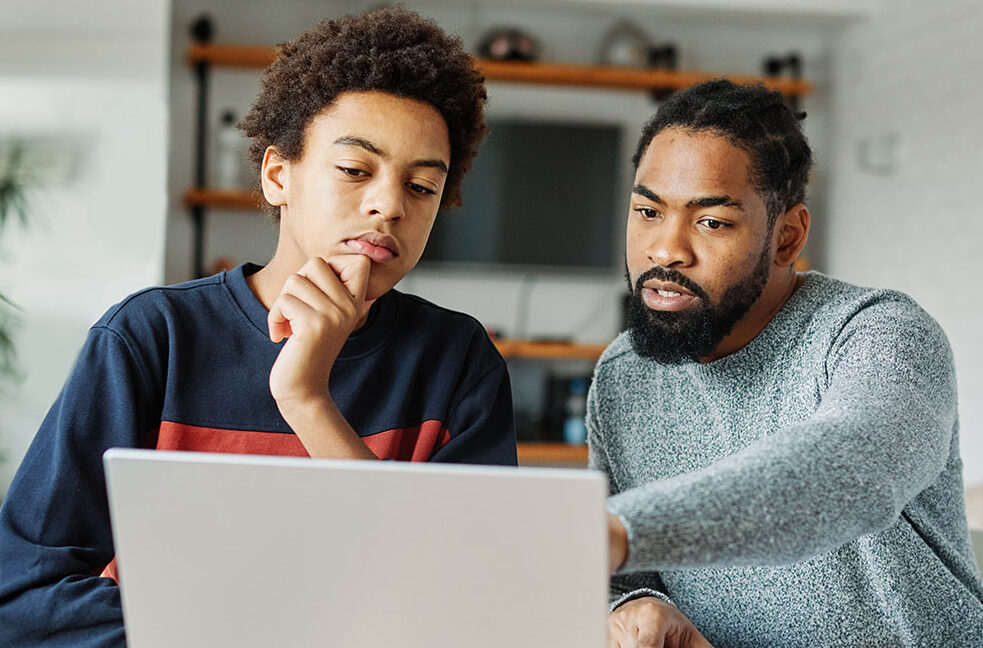
Online misogyny: supporting boys against hate
Find information and steps you can take to help support your son against online hate.
On this page
- Why you should talk to your son about online hate
- Start small
- How to have a conversation about online hate with your son
- Carry on the conversation
- Further support
Why you should talk to your son about online hate
Being online can be a positive experience for boys and young men. It can allow them to play, learn, explore and share interests with friends. But being online also comes with the risk of being exposed to online hate.
Online hate can come in many different forms, but it can also be focused specifically on girls and women (also known as misogyny).
Your son may see or inadvertently be involved in this type of online hate:
- from people he knows such as friends
- from strangers
- on content designed specifically to cause harm
It’s important to talk to your son about online misogyny, and the impact this type of behaviour can have on him and others.

Did you know?
According to the 2024 Commission for Countering Extremism, incels typically have extremely poor mental health with 1 in 5 of them contemplating suicide every day for the past two weeks.
Start small
Chose a time that is calm or neutral to start talking (such as in the car, walking together from school or at home). This will help to keep the conversation more relaxed.
These conversations might feel awkward or difficult at first but start small, and don’t be discouraged if they are not interested at first.
How to have a conversation about online hate with your son
It’s important to talk to your son about online hate and help him recognise the negative impacts of it on himself and others.
Try to listen, understand what he may be thinking or feeling and how being curious without blame can help him see you as someone trusted to talk to.
You could talk to your son about:
1. Influencers and their controversial way to get engagement
Some online content is designed to make to make money from being controversial (often called ‘rage bait’ or ‘click bait’). This is designed to create anger or frustration to generate interaction through clicks, comments, and shares.
It may pretend to give “advice for men”, but actually it could be spreading harmful ideas about women and girls.
Your son might see online content that:
- tells him emotions are for weak people
- he should look a certain way or maximise his looks called “Looksmaxxing” to fit in
- he should ignore or reject other people’s opinions if they are deemed weak or empathetic, or he doesn’t agree with them
- makes jokes that put girls or women down
- comments on women’s bodies or appearance
Recognising that this content might have been created to intentionally cause harm, can help your son decide not to look at, engage with or accept it.
2. Emotions and mental health
Talk to your son about mental health and how discussing how they are feeling can help them feel less lonely, build connections with others like them and help their overall wellbeing.
You could talk to them about:
- the myths surrounding male mental health (such as needing help makes you weak, talking about self-harm will make you suicidal)
- how they can reduce stress or anxiety and boost physical health and wellbeing by talking
- redefining what male strength means and that being vulnerable or showing emotions are not negative traits
3. Building critical thinking skills
Ask them to think about what they see, what they think the purpose of it is for and if they think things like social media algorithms influence what they are shown.
Developing critical thinking skills can help young men with:
- their self-reflection, allowing them to think about situations objectively rather than impulsively
- problem solving skills
- independent thought, allowing them to build views based on evidence rather than blind acceptance of information
- identifying misinformation
4. Toxic masculinity versus healthy masculinity
Talking to your son about masculinity may help him understand that some societal messages could be harmful to him.
For example, how the phrase “boys don’t cry” could lead to mental health problems linked to depression because he feels that he cannot show emotion.
You could talk to him about the differences between different types of masculinity and what they mean.
For example, how healthy masculinity is about promoting strength, responsibility and emotional intelligence, which allows boys and men to be empathetic, vulnerable, and respectful.
Whereas, toxic masculinity promotes gender stereotypes, dominance of others, aggression and repressing emotions.
5. Positive role models and spaces they can be involved in
These could be:
- offline activities like sports, music, art
- hobbies or creative groups which are linked to your son’s interests
- male role-models like sports personalities who encourages positive male empowerment
- online gaming areas that are moderated, to protect players from abuse and hate
Did you know?
A 2025 survey, by Girlguiding, showed that 54% of 11 to 16-year-old girls said they are careful about appearing too self-confident in front of boys for fear of abuse.
Carry on the conversation
Talking to your son about online hate is unlikely to be just one conversation. You should regularly talk to him about the subject and how he is feeling following some of the tips outlined.
You could revisit the topic in small ways, keeping calm and neutral, maybe even discussing things you have seen in TV or in films or some of his friendships, relationships.
It’s important to have ongoing conversations and make sure he feels supported and can come to you for advice.
Further support
Find further information and support to help keep your son safe from online hate:
Internet Matters has resources dedicated to misogyny including explanations for terms used
Young Minds and Mind are charities for young people offering support and advice with mental health
You can also see our guidance on how to support girls from this type of behaviour.
This is a new service. Help us improve it and give your feedback (opens in new tab).